

Designing API Gateways and Unified Access Layers in Modern SaaS Platforms
Modern SaaS platforms are no longer single-entry systems but complex ecosystems where multiple services, applications, and user interfaces interact continuously. As organizations scale, managing how these components communicate becomes a critical engineering challenge. Without a structured access layer, systems quickly become fragmented, difficult to maintain, and vulnerable to performance bottlenecks and security risks. The need is not just for connectivity, but for controlled, optimized, and scalable communication across the entire platform.
MulticoreTechnology addresses this challenge through the concept of a unified access layer powered by API gateways. This layer acts as the central entry point for all client requests, managing how data flows between frontend applications, backend services, and SaaS modules. By centralizing communication logic, organizations can enforce consistency, improve security, and optimize performance across distributed systems while maintaining architectural clarity and scalability.
The Role of API Gateways in System Architecture
An API gateway serves as an intermediary between clients and backend services, handling requests, responses, and routing logic in a controlled manner. Instead of exposing multiple services directly to clients, the gateway aggregates endpoints and presents a unified interface. This reduces complexity on the client side while allowing backend services to evolve independently without breaking integrations.
MulticoreTechnology designs API gateways to handle not only routing but also critical system functions such as authentication, rate limiting, request validation, and protocol translation. This ensures that every request entering the system is processed efficiently, securely, and consistently, regardless of which service ultimately handles it. By offloading these responsibilities to the gateway layer, backend services remain focused on core business logic, improving maintainability and scalability.
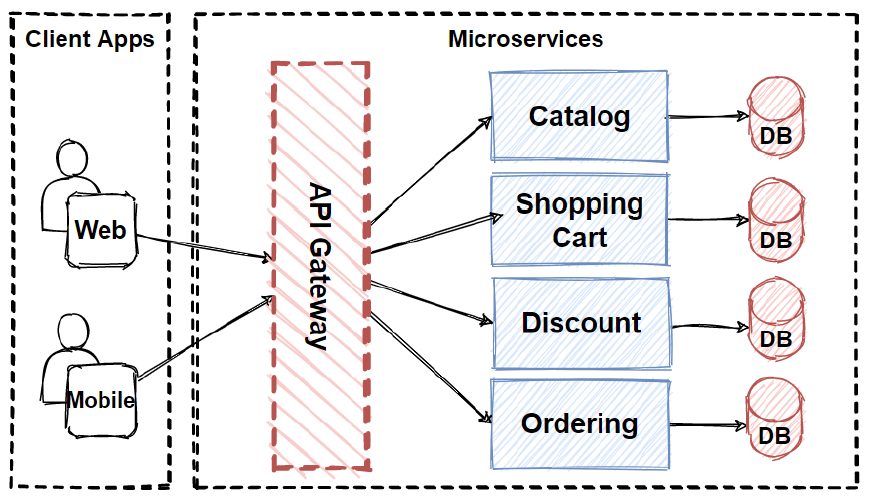
A well-designed API gateway transforms distributed complexity into a unified, manageable, and scalable system interface.
Unified Authentication and Access Control
In a multi-service SaaS environment, managing authentication across different components can become fragmented if not centralized. A unified access layer ensures that authentication and authorization are handled consistently across all services, reducing redundancy and minimizing security vulnerabilities. Token-based authentication mechanisms allow users to authenticate once and securely access multiple services without repeated credential verification.
MulticoreTechnology integrates authentication directly into the API gateway layer, ensuring that every incoming request is validated before reaching backend systems. Role-based access control and permission management are enforced centrally, allowing organizations to define and manage user privileges with precision. This approach enhances security while simplifying user experience, creating a seamless and secure interaction across the platform.
Request Routing and Service Orchestration
As SaaS platforms grow, individual services must communicate efficiently to fulfill complex workflows. API gateways enable intelligent request routing, directing traffic to the appropriate service based on context, load, or predefined rules. This ensures optimal resource utilization and prevents bottlenecks in high-demand scenarios.
MulticoreTechnology extends this capability through service orchestration, where the gateway coordinates multiple service calls to fulfill a single request. Instead of requiring the client to interact with multiple endpoints, the gateway aggregates responses and delivers a unified result. This reduces network overhead, simplifies frontend logic, and improves overall system efficiency, especially in applications requiring real-time data aggregation.
Performance Optimization and Rate Limiting
Uncontrolled access to backend services can lead to performance degradation, especially under high traffic conditions. API gateways play a critical role in managing load by implementing rate limiting, caching, and traffic shaping mechanisms. These features ensure that systems remain stable and responsive even during usage spikes.
MulticoreTechnology applies multi-layer optimization strategies within the gateway, including response caching for frequently requested data and intelligent throttling to prevent abuse or excessive load. These mechanisms not only protect system resources but also enhance user experience by maintaining consistent performance across varying demand levels.
Decoupling Frontend and Backend Systems
A unified access layer allows frontend applications to remain decoupled from backend service structures. This means frontend systems interact with a stable API interface, even as backend services evolve, scale, or undergo architectural changes. Such decoupling is essential for maintaining agility in product development and enabling independent deployment cycles.
MulticoreTechnology leverages this separation to enable rapid iteration and feature deployment without disrupting existing functionality. Backend services can be updated, replaced, or scaled independently, while the API gateway ensures continuity and compatibility. This architectural flexibility is critical for long-term system evolution and innovation.
Conclusion
API gateways and unified access layers are fundamental to building scalable, secure, and maintainable SaaS platforms. They provide a structured approach to managing communication, enforcing security, and optimizing performance across complex distributed systems. By centralizing control while enabling flexibility, these components form the backbone of modern platform architecture.
MulticoreTechnology implements these principles to create cohesive, high-performance systems where services interact seamlessly and efficiently. By aligning API design with architectural goals, organizations can build platforms that are not only scalable and reliable but also adaptable to future growth, integration, and technological advancement.
Leave a Reply